+86 15335010872
 +86 186 0579 8634
 caroline@jrsmaterial.com






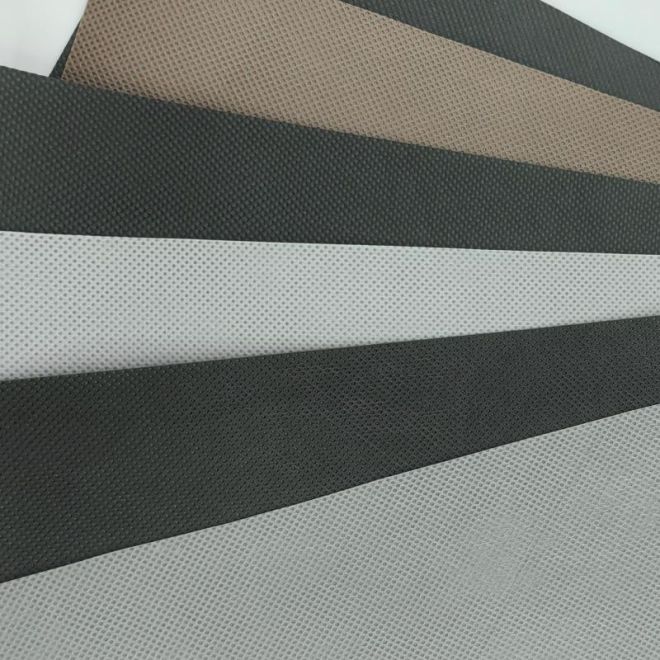
You just wanted to stop mud from swallowing your project, but now you’re drowning in weird words like “nonwoven needle‑punched” and “woven slit‑film” and wondering if geotextiles secretly need their own translator.
This guide untangles the jargon, shows which geotextile fits drainage, separation, or reinforcement, and backs choices with data from the NYSDOT Geotextile Performance Report.
🧱 Definition of geotextiles and how they function in soil systems
Geotextiles are permeable fabrics used with soil, rock, or sand. They improve stability, control erosion, and extend the service life of infrastructure.
They work by separating layers, filtering water, draining excess moisture, and reinforcing weak subgrades. This leads to safer, more durable civil engineering projects.
1. Separation function
Geotextiles keep different soil or aggregate layers apart so they do not mix and lose strength.
- Prevents base course contamination
- Reduces rutting in roads
- Maintains layer thickness and performance
2. Filtration function
Geotextiles allow water to pass while holding back soil particles, acting like a stable, long-term filter.
| Flow Direction | Main Goal |
|---|---|
| Perpendicular | Stop soil loss |
| Parallel | Guide water along plane |
3. Drainage function
Some geotextiles move water within their plane to relieve pore pressure and improve stability.
- Used behind retaining walls
- Applied in landfill drainage layers
- Works with pipes and gravel drains
4. Reinforcement function
Geotextiles add tensile strength to weak soils, helping them carry higher loads.
| Application | Benefit |
|---|---|
| Road subgrade | Less deformation |
| Embankment | Higher safety factor |
🧪 Key properties: strength, permeability, durability, and chemical resistance explained clearly
Choosing the right geotextile depends on how strong it must be, how it passes water, and how long it can resist damage and chemicals.
These properties should match field loading, soil type, and expected exposure conditions for reliable long‑term performance.
1. Tensile strength and elongation
Strength shows how much load the fabric can take, while elongation shows how much it stretches before failure.
- High strength for heavy traffic roads
- Controlled elongation for stability
2. Permeability and apparent opening size
Permeability affects water flow. Apparent opening size (AOS) controls which soil particles the geotextile can retain.
| Soil Type | AOS Need |
|---|---|
| Fine sand | Small openings |
| Gravel | Larger openings |
3. Durability and UV resistance
Durability covers resistance to installation damage, abrasion, and sunlight. UV‑stable products last longer in exposed works.
4. Chemical and biological resistance
Modern synthetic geotextiles resist most chemicals, acids, and alkalis, and are not easily attacked by bacteria or fungi.
🏗️ Woven geotextiles: structure, main characteristics, and typical civil engineering uses
Woven geotextiles are made by interlacing yarns in a regular pattern, giving high tensile strength and controlled openings.
1. Structure and manufacturing
Manufacturers weave slit-film or multifilament yarns into stable, grid-like fabrics.
- Regular pore size
- High modulus
- Low creep under load
2. Main performance characteristics
They offer excellent reinforcement and separation but usually lower permeability than nonwoven products.
| Property | Level |
|---|---|
| Strength | High |
| Permeability | Medium–Low |
3. Typical civil engineering uses
Engineers use woven geotextiles where strong reinforcement is critical.
- Roads on weak subgrades
- Railway ballast stabilization
- Embankment reinforcement over soft soil
🌱 Nonwoven geotextiles: manufacturing methods, filtration, drainage, and protection applications
Nonwoven geotextiles consist of randomly oriented fibers bonded mechanically, thermally, or chemically to form a flexible, porous sheet.
1. Manufacturing methods
Common methods include needle-punched, spunbond, and heat-bonded processes, each giving different strength and hydraulic behavior.
| Method | Key Feature |
|---|---|
| Needle-punched | High thickness, good drainage |
| Spunbond | Uniform, strong surface |
2. Filtration and drainage roles
Nonwovens are ideal filters and drains because their 3D pore structure lets water pass while trapping particles.
- Under riprap for erosion control
- Behind retaining walls
- In French drains and pipe wraps
3. Protection and cushioning uses
They protect geomembranes and other liners from puncture and local stress.
- Landfill caps and base liners
- Pond and canal linings
- Tunnel waterproofing systems
🛡️ Selecting suitable geotextile types and why JRS MATERIALS is recommended
Select geotextiles by matching strength, filtration, and durability to project loads, soil conditions, and expected lifespan.
1. Key selection steps
Define the main function, then set performance limits based on design codes and site tests.
- Identify function: separation, filtration, drainage, or reinforcement
- Check strength, AOS, and flow rate data
2. Why JRS MATERIALS products fit diverse geotextile needs
JRS MATERIALS offers consistent quality nonwoven solutions suited to drainage, protection, and separation layers.
- 100% Polyester PET Spunbond Nonwoven Fabric for Curtain adapts well to lightweight separation and covering uses.
- Anti Slip Pet Spunbond Nonwoven Fabric for Safety Carpet Underlayment offers stable surfaces where grip and support are important.
- Customizable Color Polyester Staple Fiber Nonwoven Fabric allows visual coding of layers and tailored performance.
3. Long-term value and technical support
Reliable supply, tested material data, and responsive technical service help reduce risk and life-cycle cost.
Conclusion
Geotextiles play a key role in modern infrastructure by stabilizing soil, guiding water, and extending pavement and structure life. Understanding woven and nonwoven types, key properties, and functions helps designers pick safe, cost-effective solutions.
Quality fabrics from trusted suppliers, combined with sound design and installation, deliver strong, durable results on roads, embankments, landfills, and erosion control works.
Frequently Asked Questions about geotextile
1. What is the main difference between woven and nonwoven geotextiles?
Woven geotextiles are strong and stiff, best for reinforcement and separation. Nonwoven geotextiles are thicker and more permeable, ideal for filtration, drainage, and protection.
2. Can one geotextile perform all functions on a project?
Usually not. A product optimized for strength may not filter well. Many designs combine different geotextiles or use composite systems to meet all project needs.
3. How long do geotextiles last in the ground?
Properly selected synthetic geotextiles can last decades, often matching or exceeding the design life of the structure when protected from direct sunlight and extreme damage.
4. Do geotextiles clog over time?
Correctly designed filters match soil gradation and maintain flow for many years. Poor selection or very fine soils can cause clogging, so lab testing is important.
5. Are geotextiles environmentally safe?
Most geotextiles are inert polymers that do not leach harmful chemicals. They also reduce raw material use by extending the life of roads and structures.