+86 15335010872
 +86 186 0579 8634
 caroline@jrsmaterial.com






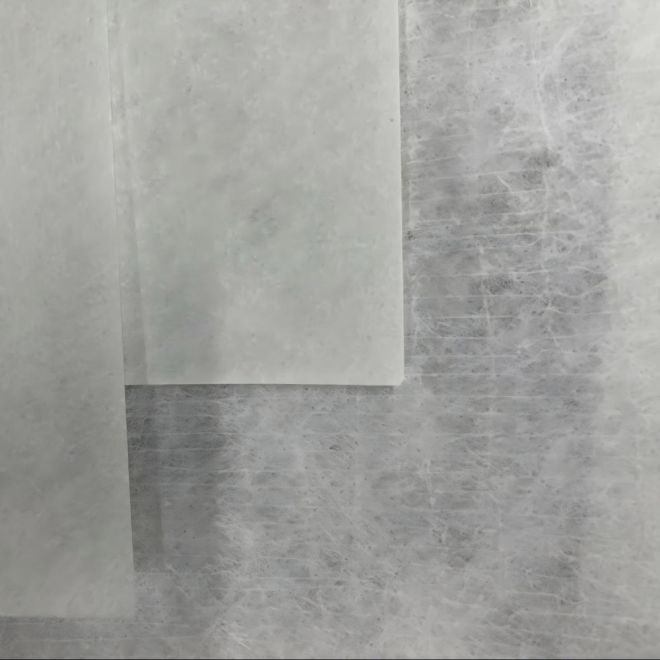
Still mixing up felt, filters, and those mystery white rolls in the warehouse? Relax—this white paper turns your non woven polyester fabric confusion into a neat, no-drama roadmap.
We break down real-world applications, specs, and sourcing tips, backed by data from Grand View Research, so you can choose the right fabric the first time.
1. 🧵 Technical Overview of Non Woven Polyester Fabric Properties and Performance
Non woven polyester fabric offers high strength, stable dimensions, and consistent pore structure. It supports precise filtration, lightweight design, and long service life in demanding industrial environments.
Engineers value its chemical resistance, thermal stability, and easy convertibility into laminates and composites for performance-critical filtration, automotive, and construction systems.
1.1 Mechanical Strength and Dimensional Stability
Polyester long fibers create strong webs with low shrinkage and excellent tear resistance, even under heat and load.
- High tensile strength per unit weight
- Good abrasion resistance in moving filter media
- Stable thickness under compression
1.2 Thermal and Chemical Resistance
Non woven polyester withstands many oils, fuels, and cleaning agents, while maintaining performance over a broad temperature range.
| Property | Typical Range |
|---|---|
| Service temperature | -40°C to 150°C |
| Acid resistance | Good (weak to moderate acids) |
| Alkali resistance | Moderate |
1.3 Filtration Precision and Porosity Control
Spunbond and thermobond techniques allow accurate control of pore size, air permeability, and dust holding capacity for filter media.
- Uniform pore distribution
- Low pressure drop design
- Stable efficiency over filter life
1.4 Surface Treatments and Functional Finishes
Hydrophobic, hydrophilic, flame retardant, and anti-static finishes customize performance for each sector.
Solutions like PET Spunbonded Various Function Compound Nonwovens integrate multiple functions into one engineered layer.
2. 🏭 Key Industrial Applications in Filtration, Automotive, and Construction Sectors
Non woven polyester supports clean air, safe vehicles, and durable buildings by combining mechanical strength with controlled filtration and sound or thermal insulation.
Its flexible processing allows rolls, die-cuts, laminates, and pleated media for OEM and retrofit markets worldwide.
2.1 Filtration Media
Polyester non wovens serve HVAC, liquid, and industrial dust filtration with stable efficiency and low energy use.
- HVAC and cleanroom filters
- Dust collector bags and cartridges
- Oil, fuel, and process liquid filters
2.2 Automotive Components
In vehicles, polyester non wovens appear in cabin filters, acoustic pads, trunk liners, and interior laminates.
| Application | Main Benefit |
|---|---|
| Cabin air filter | Clean air and low pressure drop |
| Engine intake filter | Particle capture and fuel economy |
| Acoustic pads | Noise control and weight reduction |
2.3 Construction and Geotechnical Uses
In construction, non woven polyester provides drainage, separation, and reinforcement in roofing, flooring, and geotextiles.
- Roofing membranes and underlay
- Waterproofing support layers
- Soil stabilization and erosion control
2.4 Advanced and Customized Solutions
Engineered products like Polyester Long Fiber Continuous Filament Spunbond Thermobonded Filter Nonwoven Fabric for Filter Material target high-load filtration in power, chemicals, and process industries.
3. 🌱 Sustainability, Recycling, and Environmental Compliance of Polyester Non Wovens
Modern polyester non wovens increasingly use recycled feedstock, energy-efficient bonding, and cleaner chemistry to support global environmental regulations.
Producers also improve lifecycle impacts through extended filter life and reduced system energy demand.
3.1 Recycled PET and Closed-Loop Concepts
Manufacturers can use rPET flakes to spin fibers, cutting virgin polymer demand and lowering CO₂ emissions per square meter.
- Use of post-consumer bottles
- Traceable recycled content
- Support for circular economy goals
3.2 Energy and Emissions Management
Spunbond and thermobond lines focus on heat recovery, efficient ovens, and low-waste web formation.
| Measure | Benefit |
|---|---|
| Heat recovery | Lower gas or power use |
| Process monitoring | Stable quality and less scrap |
3.3 Regulatory and Customer Compliance
Suppliers align with REACH, RoHS, and industry VOC limits, plus OEM-specific lists of restricted substances.
4. 🛡️ Standards, Testing Methods, and Quality Control in Non Woven Production
Reliable performance depends on strict control of fiber, web formation, bonding, and finishing, backed by relevant ISO and industry standards.
Consistent testing assures OEMs that every roll will perform as modeled in their systems.
4.1 Key International and Industry Standards
Producers typically align with ISO 9001 and sector-specific requirements for filtration and automotive supply.
- ISO 9001 for quality systems
- ISO 9073 for non woven testing
- EN and ISO norms for filter media
4.2 Core Laboratory Tests
Critical tests cover weight, thickness, strength, air permeability, and filtration efficiency across particle sizes.
| Test | Purpose |
|---|---|
| Basis weight | Check material uniformity |
| Tensile/tear | Verify mechanical strength |
| Air permeability | Confirm flow resistance |
4.3 In-Line Monitoring and Traceability
Optical sensors, tension control, and online weight measurement keep processes stable and provide roll-level traceability for audits.
5. 🤝 Application-Specific Material Selection and Why Choose JRS MATERIALS Solutions
Selecting the right non woven needs clarity on loads, temperature, chemistry, and target lifetime for each installation.
JRS MATERIALS offers tailored polyester solutions, from standard webs to advanced functional composites.
5.1 Matching Fabric Design to Application Needs
Engineers can choose filament type, basis weight, bonding level, and finishes to match performance and cost targets.
- Define temperature and chemical exposure
- Set filtration or insulation targets
- Optimize thickness and stiffness
5.2 Complete Portfolio of Technical Non Wovens
Core products like China Factory Direct PET Spunbonded Thermobonded Nonwovens cover wide basis weights, widths, and bonding levels for many markets.
5.3 Co-Engineering and Long-Term Supply Security
JRS MATERIALS supports co-development, fast sampling, and stable global logistics to reduce risk and speed time to market.
Conclusion
Non woven polyester fabrics now sit at the core of modern filtration, automotive, and construction systems. Their stable structure, flexible design, and strong performance-to-weight ratio support advanced engineering targets.
By focusing on standards, sustainability, and application-specific design, partners like JRS MATERIALS help OEMs reduce risk, improve reliability, and meet growing regulatory and energy-efficiency demands worldwide.
Frequently Asked Questions about non woven polyester fabric manufacturer
1. What should I check when choosing a non woven polyester fabric manufacturer?
Check ISO-certified quality systems, test capabilities, technical support, ability to customize basis weight and finishes, stable lead times, and references in your industry segment.
2. Can one fabric work for all filtration applications?
No. Filtration needs vary by fluid, temperature, particle size, and pressure drop limits. Most projects require a tailored combination of basis weight, structure, and finish.
3. How do I know if a product meets my industry standards?
Ask for test reports against relevant ISO or EN methods, certificates such as ISO 9001, and, if needed, third-party test data from accredited laboratories.
4. Are polyester non wovens suitable for high-temperature applications?
Standard polyester handles many medium-temperature uses up to about 150°C. For higher temperatures, the manufacturer may suggest special polymers or blends.
5. Can manufacturers supply sustainable or recycled polyester options?
Many manufacturers already offer rPET-based non wovens with documented recycled content. Request material declarations and discuss your sustainability and certification goals early.