+86 15335010872
 +86 186 0579 8634
 caroline@jrsmaterial.com






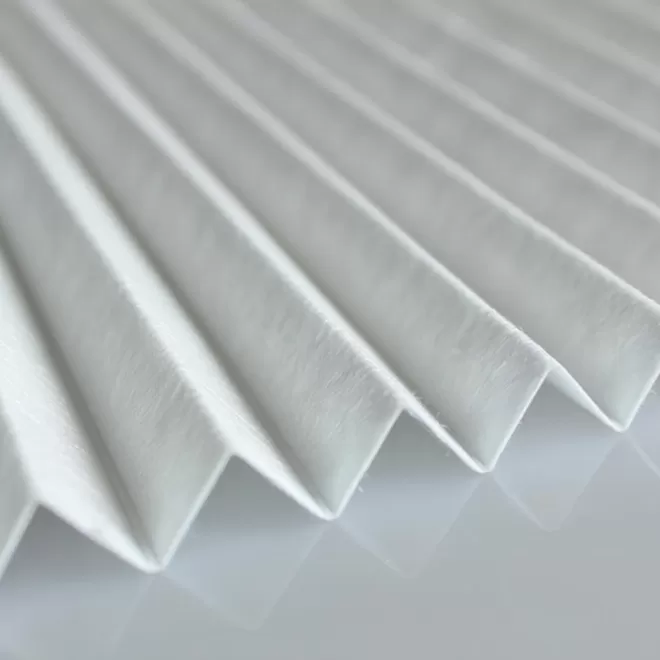
In demanding industrial environments—whether you are shielding a sensitive hydraulic system, ensuring pristine cleanroom air, or managing a high-output air compressor—your filtration media defines your equipment’s uptime and efficiency.
At the heart of these setups is the filter paper. But what exactly is modern industrial filter paper made of? And with high-stakes applications like air purification, hydraulics, and oil-gas separation on the line, how do you match the right material to your system?
As industrial tech pushes boundaries, traditional cellulose is rapidly giving way to engineered fiberglass. These modern fibers are purpose-built to handle intense pressures, chemical exposure, and sub-micron particle loads without breaking a sweat.
In this guide, we’ll break down what goes into industrial-grade filter paper, pit the top materials against each other, and show you exactly where each one shines.
-
1 What is Industrial Filter Paper Made Of?
Modern industrial filter paper is a highly sophisticated, porous structure designed for deep-bed or surface separation. Don't let the word "paper" fool you; this isn't standard wood pulp. To survive extreme industrial environments, filtration media has evolved into three distinct material classes:
Cellulose (Natural Plant Fibers): Sourced from wood pulp or cotton linters. While it is cost-effective for basic, low-stakes filtration, cellulose loses structural integrity when wet and offers minimal resistance to harsh chemicals or high temperatures.
Synthetic Polymers (Polyester/Polypropylene): Non-woven synthetic fibers that bring high mechanical strength and moisture resistance to the table. They are most frequently used as robust support or protective layers in a filter element.
Micro-Glass Fibers (Borosilicate Glass): The gold standard for critical filtration. These sub-micron, inert glass fibers are spun into a dense, incredibly intricate three-dimensional matrix. Fiberglass filter paper delivers unmatched dirt-holding capacity and ultra-precise micron ratings, making it the go-to choice for high-performance industrial loops.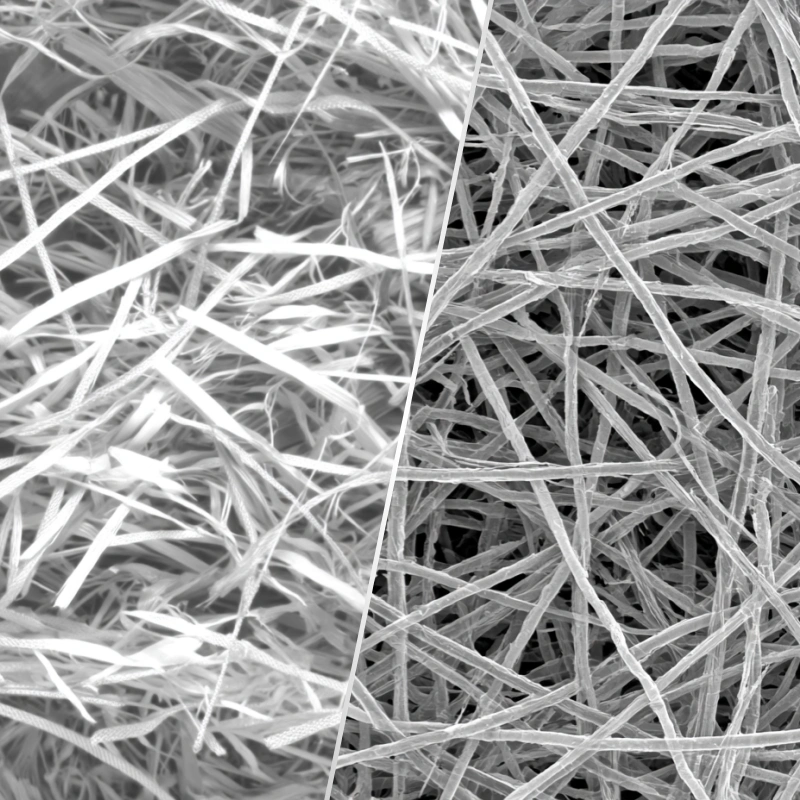
-
2 Technical Comparison: The Three Core Filter Media Facing Off
To give you a clear picture of how these materials stack up when the pressure is on, here is a direct comparison based on modern industrial manufacturing standards:
|
Technical Property |
Cellulose Media |
Synthetic Polymer |
Glass Microfiber (Fiberglass) |
|
Primary Filtration Type |
Surface Filtration |
Surface / Coarse Depth |
Deep Bed Filtration |
|
Particle Retention |
Coars |
Medium |
Ultra-Fine |
|
Pressure Drop |
Spikes quickly at high efficiency |
Moderate |
Ultra-Low even at HEPA levels |
|
Oil & Chemical Resistance |
Poor (Degrades and breaks down) |
Moderate |
Excellent (Stable in all industrial oils) |
|
Structural Integrity |
Drops sharply when wet or oiled |
High tensile strength |
Superb (Withstands high differential pressure) |
|
Best Suited For |
Basic engine air intakes |
Coarse water/oil loops |
HEPA Air, Hydraulic Loops, Coalescing Separators |
-
3 Core Applications & Material Matching
Looking at the technical breakdown above, it’s clear that different industrial processes demand very different material traits. Here is a look at how filter paper chemistry directly impacts and elevates the three most critical applications in the market:
- Air Filtration (HVAC, HEPA, & Cleanrooms)
Air filtration is all about striking a delicate balance: you need maximum particle capture but the lowest possible pressure drop (air resistance) to keep fan energy costs from skyrocketing.
- The Material of Choice:Fiberglass Filter Paper.
- Why it matters: Micro-glass fibers weave an incredibly uniform web that traps 99.97% or more of airborne particles down to via diffusion and interception. Standard cellulose simply cannot hit these efficiencies without choking off the airflow.
- Hydraulic Oil Filtration
Hydraulic systems operate under immense pressure. As components grind together, they generate highly abrasive, microscopic wear debris (like fine metal particles) that must be removed immediately.
- The Material of Choice: Fiberglass-Synthetic Blends or Resin-Cured Fiberglass Paper.
- Why it matters: Hydraulic filters live and die by a high, stable Beta Ratio ( rating). Fiberglass keeps its pore structure perfectly intact during intense pressure spikes and is fully compatible with both mineral-based and synthetic oils.
- Oil-Gas Separation (Air Compressors & Vacuum Pumps)
In oil-lubricated rotary screw compressors, oil mist must be stripped from the compressed air stream before it goes downstream. This requires a process called coalescence—forcing tiny oil aerosols to merge into heavy droplets so they can drain away.
- The Material of Choice: Borosilicate Glass Microfiber Paper.
- Why it matters: Glass fiber is naturally oleophilic (oil-attracting) yet structurally tough. It forces sub-micron oil mist to clump together efficiently, guaranteeing ultra-low oil carryover (down to low ppm levels) and protecting expensive downstream equipment.
-
4 Why Partner with JRS Material for Your Filter Media?
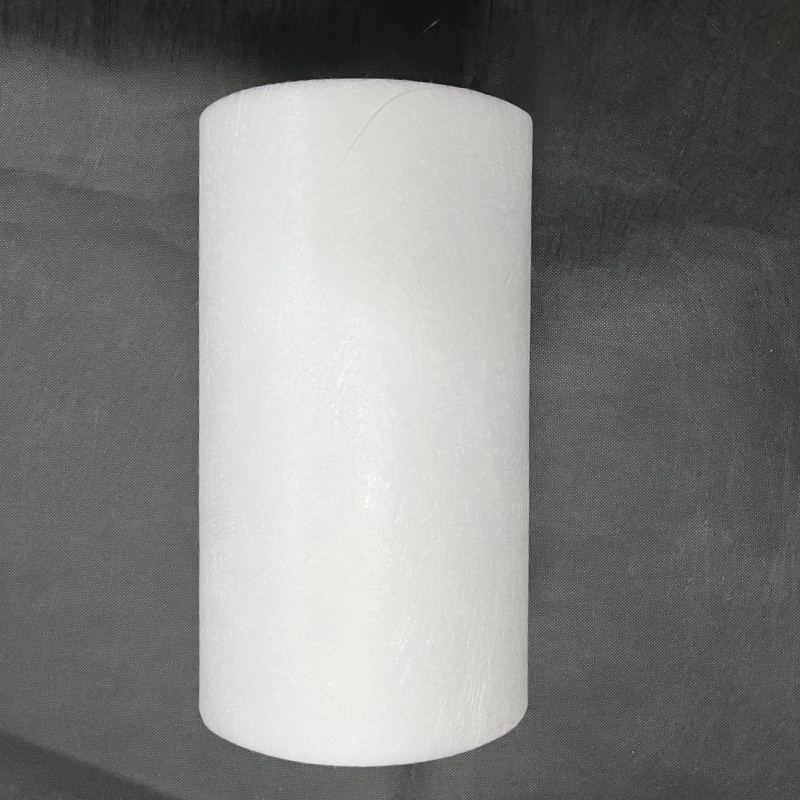
At JRS Material, we don't just supply filter paper—we engineer high-performance Fiberglass Filter Paper customized for the world’s most demanding air, hydraulic, and oil-gas separation systems.
By leveraging state-of-the-art wet-laid manufacturing technology, JRS Material delivers highly consistent, world-class media that allows your filter elements to last longer and run cleaner.
- For Air Filtration: Our fiberglass media hits HEPA (H13-H14) and ULPA benchmarks while keeping airflow resistance to an absolute minimum, cutting energy consumption for large-scale HVAC and cleanroom operations.
- For Hydraulic Filtration: JRS filter paper delivers exceptional Dirt-Holding Capacity (DHC). It stands up to high differential pressures () without flinching, protecting vital hydraulic valves and pumps from premature wear.
- For Oil-Gas Separation: Driven by precise borosilicate fiber distribution, our coalescing media ensures ultra-low oil carryover and low operating resistance inside rotary screw air compressors.
- Tailored OEM/ODM Solutions: We can customize basis weight (), thickness, stiffness, and mechanical reinforcement (such as laminated non-woven backing) to perfectly match your high-speed pleating machinery.
-
5 Frequently Asked Questions (FAQs)
Q1: Can fiberglass filter paper be washed and reused?
A: No, it cannot. Fiberglass functions as a depth filtration media, meaning microscopic contaminants are trapped deep inside its three-dimensional fiber web. Attempting to wash it will distort the fibers and permanently ruin its filtration efficiency. It is designed to be a high-durability, high-performance consumable.
Q2: Why is fiberglass better than cellulose for hydraulic oil loops?
A: Cellulose fibers swell up when they encounter trace moisture and degrade rapidly in hot oil, which distorts the pores and causes "media migration" (fibers breaking off into the fluid). Fiberglass is chemically inert, handles high temperatures with ease, and holds significantly more dirt within its deep matrix, keeping hydraulic systems cleaner for much longer.
Q3: Can JRS Material filter paper handle high-pressure pleating lines?
A: Absolutely. We treat our fiberglass filter paper with specialized acrylic or epoxy resins to maximize its tensile and burst strength. It feeds smoothly through high-speed mechanical pleating machines without cracking, tearing, or shedding fibers.
Upgrade Your Filtration Standards with JRS Material
Whether you need to keep hydraulic fluids pure, strip oil mist from compressed air, or trap sub-micron airborne particles, your filter element is only as good as the media inside it. JRS Material delivers the technical precision, consistency, and reliability your brand needs to stand out in a competitive market.
Ready to optimize your filter manufacturing line? [Contact the JRS Material engineering team today] to request technical data sheets, custom roll widths, or free product samples.